
 EN
EN



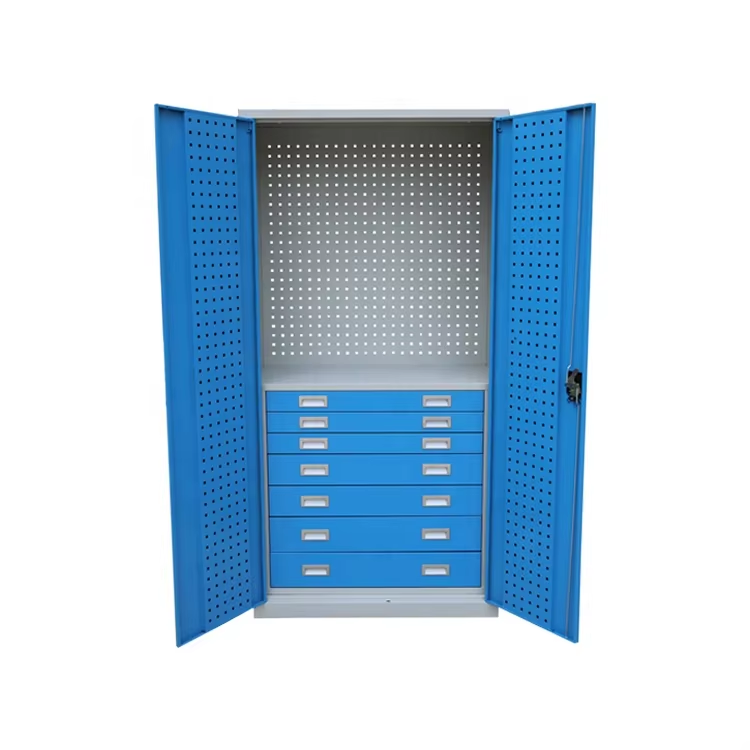
How to Choose the Right Size Metal Locker for Employee Use
The Importance of Accurate Sizing for Workplace Metal Lockers
Metal lockers are staple storage fixtures for all types of commercial workplace environments, delivering sturdy and long-lasting storage solutions for daily staff use. The overall practicality of these steel storage units largely depends on proper size selection, a detail that many facility planners overlook during workspace renovation and setup. Improperly sized lockers create inconsistent usage experiences and disrupt the unified layout of organized work areas, bringing unnecessary troubles to daily facility management.
Global commercial space design institutions have released unified guiding standards for workplace fixture configuration, pointing out that standardized size matching is the premise of rational workplace layout. Unsized lockers either fail to meet basic storage needs or waste valuable indoor space resources, affecting the overall neatness and regularity of public areas. Mastering scientific locker sizing methods helps build stable, orderly and highly practical workplace storage systems suitable for long-term daily use.
Focus on Usable Internal Compartment Space Instead of External Dimensions
A common misconception when selecting metal lockers is judging usability solely by external height, width and depth data. In actual finished products, door frames, locking structures and internal support frameworks will occupy partial space, making the actual usable interior area different from exterior specifications. This key detail determines whether daily storage can remain smooth and orderly for staff.
Facility management professionals with rich practical experience emphasize that internal compartment parameters are the core evaluation indicators for locker selection. Qualified employee lockers need to reserve sufficient internal space to accommodate daily personal belongings, maintaining unobstructed placement and access. Reasonable internal space design avoids crowded storage conditions and ensures basic comfort for daily use, which is the fundamental standard for screening high-quality matched lockers.
Match Locker External Specifications With On-Site Spatial Conditions
Every fixed workplace area has stable spatial boundaries formed by walls, passages and building structures, which restrict the applicable specifications of metal lockers. Random selection of locker sizes without on-site measurement will lead to poor fitting between fixtures and the overall space, resulting in cramped passage environments or redundant blank areas that damage the unity of space layout.
Commercial interior design norms clearly state that workplace storage fixtures need to maintain harmonious spatial coordination with the surrounding environment. Before confirming locker specifications, comprehensive measurement of the installation area and reserved public moving space are essential. Scientific size matching enables lockers to be perfectly integrated into the original workplace layout, maintaining smooth public passages and neat overall visual effects of functional areas.
Select Reasonable Locker Structures Based on Space Layout Needs
Metal lockers have diverse structural forms, including full-height integrated styles and multi-layer combined styles, with different structural sizes adapting to different space layout requirements. Full-height lockers feature integrated vertical space with strong overall integrity, while multi-layer combined lockers adopt segmented design to realize intensive layout of multiple storage units.
Different structural designs provide diversified layout options for workplace public storage areas. Reasonable structural collocation can optimize the utilization mode of indoor fixed space and maintain orderly arrangement of storage fixtures. Scientific structural selection avoids irregular layout of lockers, ensuring the long-term tidiness and standardization of workplace public storage areas.
Pay Attention to Auxiliary Dimensional Details for Standardized Use
In addition to core internal and external dimensions, subtle auxiliary dimensional designs also affect the overall quality and daily use experience of metal lockers. Standardized shelf spacing, reserved door gaps and uniform ventilation openings are all essential parts of finished product specifications. These detailed dimensional designs follow unified industrial production standards, ensuring the structural rationality of lockers.
Standard auxiliary size configuration maintains good internal air circulation and smooth switch operation of lockers, avoiding structural jams and poor ventilation problems. Attention to these standardized details helps select lockers with more stable structural performance and higher overall matching degree with workplace environments, improving the overall quality of workplace supporting facilities.
Standardized Manufacturing Ensures Stable and Unified Locker Quality
Unified dimensional specifications and stable structural quality of metal lockers rely on mature industrial manufacturing systems and strict standardized production processes, core advantages that FT Steel Furniture consistently upholds. Focusing on the R&D and production of high-standard steel furniture, FT Steel Furniture owns standardized production workshops and complete precision processing equipment.
All locker products adopt unified industrial dimensional standards and undergo multi-process calibration and inspection during production, ensuring the accuracy and consistency of every finished unit. With a complete production system and stable manufacturing standards, FT Steel Furniture provides highly matched metal locker products for various workplace layout scenarios, delivering reliable standardized supporting fixture solutions for global commercial space construction.
Table of Contents
- How to Choose the Right Size Metal Locker for Employee Use
- The Importance of Accurate Sizing for Workplace Metal Lockers
- Focus on Usable Internal Compartment Space Instead of External Dimensions
- Match Locker External Specifications With On-Site Spatial Conditions
- Select Reasonable Locker Structures Based on Space Layout Needs
- Pay Attention to Auxiliary Dimensional Details for Standardized Use
- Standardized Manufacturing Ensures Stable and Unified Locker Quality
