
 EN
EN



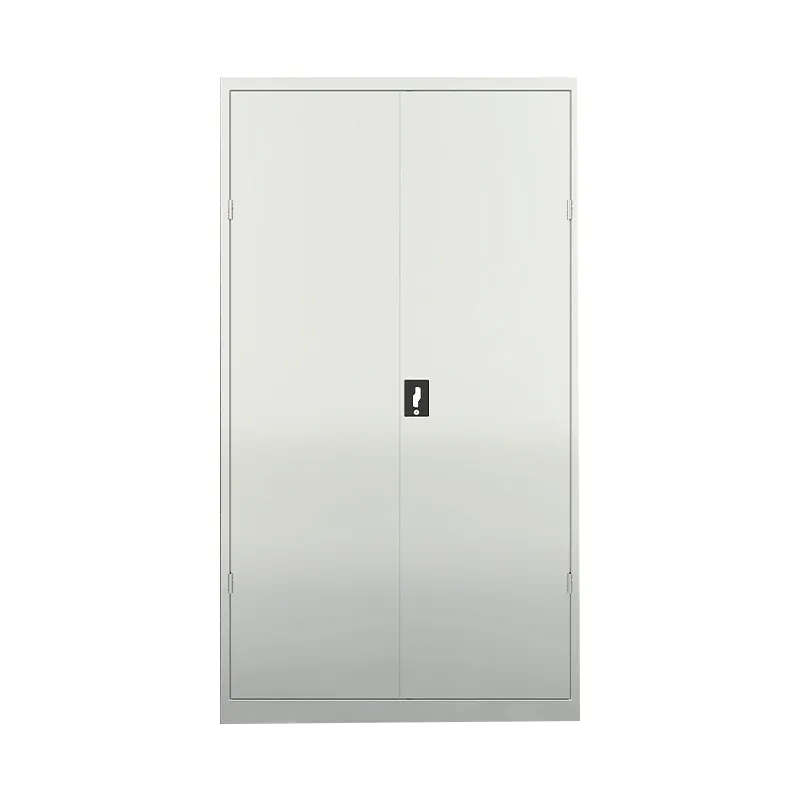
Vertical Storage Solutions to Minimize Floor Footprint
Tower cabinets with multi-tier slide-out trays for wall-adjacent efficiency
A tower cabinet transforms unused vertical airspace into a dense, accessible storage zone—ideal when floor area is limited, as in workshops under 500 square feet. Rather than expanding outward, the only practical growth path is upward. Multi-tier full-extension slide-out trays are the core innovation: they bring contents directly to the operator, eliminating the need for front-of-shelf aisle clearance. This design allows a single tower to store 40–60% more tools per square foot of floor space than a traditional chest of equivalent width, based on internal layout studies (2023). Cabinets with a depth of 18 inches or less sit flush against the wall, preserving primary workflow paths. Their vertical orientation also supports ergonomic zoning—heavy, infrequently used items stabilize the base, while daily-access tools occupy waist-to-eye-level trays. This reduces repetitive bending and reaching, cutting average tool retrieval time by 15 seconds (NIOSH 2022). For small workshops, the tower cabinet functions not just as storage—but as a vertical workflow engine that compresses utility into the slimmest possible floor footprint.
Ceiling- and rail-mounted tool cabinet systems for overhead utilization
Ceiling-mounted systems tap into the most underused storage plane in any workshop: overhead volume above 7 feet. Rail-mounted tool cabinets—suspended from fixed ceiling brackets or overhead tracks—hold low-frequency items such as seasonal jigs, specialized dies, or backup power tools. These systems support a distributed load of 150–250 pounds across a 4-foot rail span without occupying floor space. Safety-critical headroom clearance must remain at least 6 feet 8 inches from finished floor to the cabinet’s lowest point, meeting OSHA egress standards (2023). Two practical configurations exist: static ceiling grids, where cabinets lock into pre-drilled overhead channels, and sliding rail systems that let cabinets glide along the ceiling to the point of use. The latter is especially effective in narrow workshops with a central aisle, bringing tools to the bench instead of requiring operator movement. When paired with wall-anchored tower cabinets, ceiling storage establishes a tri-zone strategy—floor-level mobility, waist-level daily access, and overhead long-term reserve. This layered approach can reclaim up to 30% of floor space otherwise consumed by low-rotation storage, making it essential for functional, uncluttered small workshops.
Modular and Foldable Tool Cabinet Systems
Stackable, standardized-depth (≤18") units for flexible wall-zone configuration
Standardized-depth tool cabinets (≤18 inches) hug the wall, preserving floor space for movement and larger equipment. Stackable modules with interlocking latches allow vertical expansion—adding drawers, compartments, and organizers as tool collections grow. This eliminates reliance on fixed, deep cabinets that sacrifice valuable square footage. A 2024 industry analysis found slim-profile units improve aisle clearance by up to 40% compared to full-depth chests. Their shallow depth also encourages disciplined organization: each drawer is assigned to a specific tool category, reducing retrieval time. Steel-frame construction with reinforced corners ensures stability—even when stacked to eye level. Many systems include wheeled bases, transforming the entire stack into a mobile tool cabinet that locks securely along any wall. Reconfiguration requires no tools, enabling rapid adaptation to changing project demands. In this way, modular cabinets become a long-term investment in flexible, scalable workshop organization.
Hinged or telescoping fronts that convert into auxiliary work surfaces
Fold-down fronts add temporary, high-strength work surface area without increasing footprint. When hinged or telescoped outward, the front panel becomes a rigid bench for assembly, inspection, or parts layout. Gas-spring assists and locking hinges support up to 200 lb, ensuring stability during use. A 2023 field study found shops using these convertible fronts gained 25% more usable bench area while keeping cabinet depth under 20 inches. When not needed, the panel folds back flush—restoring full aisle clearance instantly. Designed for one-hand operation, the mechanism lets workers switch between storage and workbench modes in seconds. This dual-purpose functionality eliminates the need for a separate table, turning the tool cabinet into a true space-saving hub in compact workshops.
Under-Bench and Mobile Tool Cabinet Integration
Low-profile rolling tool cabinets designed to fully retract beneath 36" workbenches
Standard 36-inch workbenches provide approximately 34.5 inches of clearance beneath the top—a zone ideal for low-profile rolling tool cabinets. Engineered to slide fully into this space, these units store tools without claiming permanent floor area. Their compact height conceals the cabinet when retracted, while industrial casters enable quick, stable repositioning. During use, the cabinet pulls out for immediate access; afterward, it slides back under the bench—reclaiming floor space instantly. Models commonly feature shallow drawers, pull-out trays, and locking casters for security. This mobile integration keeps hand tools and small power tools within arm’s reach, reducing walk time and protecting gear from dust and clutter. A low center of gravity prevents tipping during movement, and drawer liners with dividers help organize fasteners and bits. By treating the under-bench zone as a dynamic storage module, woodworkers optimize both accessibility and open workspace—turning dead space into high-utility storage aligned with lean workshop principles.
Ergonomic Interior Layouts That Optimize Access in Compact Tool Cabinets
Rotating drum organizers and flip-down pegboard backs for ≤24″-deep tool cabinets
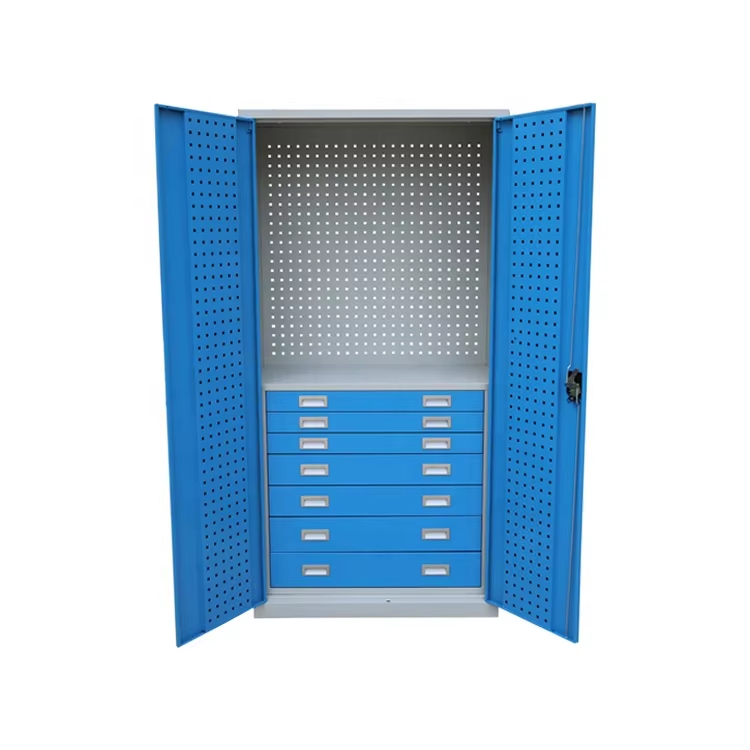
In tool cabinets limited to 24 inches deep, traditional fixed shelving often creates inaccessible rear “dead zones.” Rotating drum organizers solve this by bringing tools forward with a simple spin—keeping every item within a comfortable 180-degree reach envelope and eliminating the need to stretch or rummage. Flip-down pegboard backs further extend utility: when lowered, they expose hooks, magnetic strips, or small bins, effectively doubling accessible surface area without increasing footprint. This configuration is especially valuable for technicians managing rapid task-switching, as it minimizes repetitive bending and twisting—the leading contributors to fatigue in small workshops. By integrating these dynamic interior layouts, even the most compact tool cabinet delivers fast, strain-free access to frequently used instruments—supporting smoother workflows and safer, more organized environments.
FAQ
What are tower cabinets best suited for?
Tower cabinets are ideal for small workshops with limited floor space. They maximize storage by utilizing vertical airspace and provide ergonomic zoning for increased efficiency.
How much weight can ceiling-mounted cabinets support?
Ceiling-mounted cabinets can support a distributed load of 150–250 pounds across a 4-foot rail span, depending on the system used.
What advantages do modular tool cabinets offer?
Modular tool cabinets provide flexibility, scalability, and better aisle clearance. They allow users to expand storage capacity vertically and adapt the configuration as needed.
Can fold-down cabinet fronts double as work surfaces?
Yes, fold-down cabinet fronts can convert into sturdy work surfaces, supporting up to 200 lb, while saving space by folding back flush when not in use.
Why are rotating drum organizers helpful?
Rotating drum organizers eliminate rear "dead zones" in tool cabinets and make tools accessible with ease through a simple spin, reducing strain and retrieval times.
