
 EN
EN



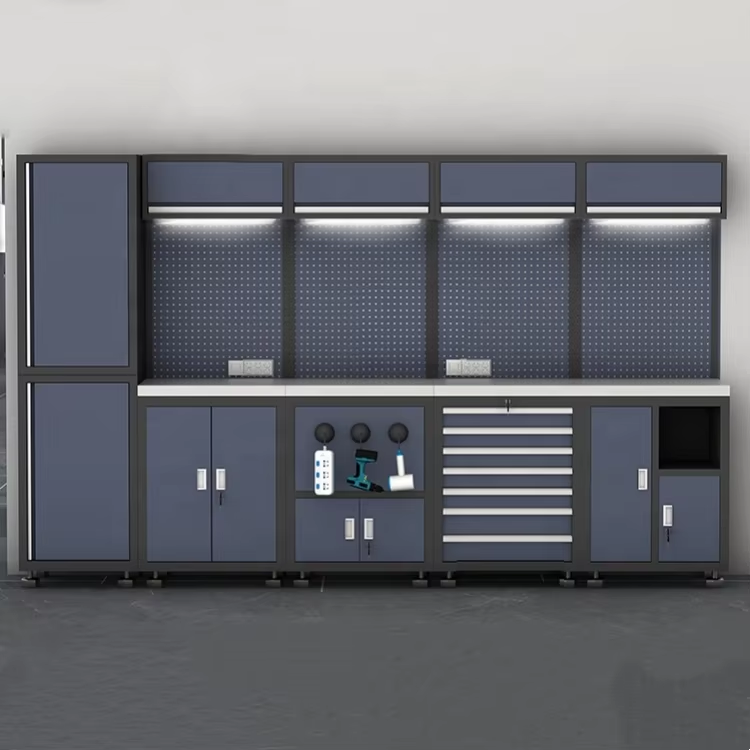
Match Your Tool Workbench to Core Workshop Activities
Woodworking Demands: Flatness, Surface Integrity, and Precision Workholding
A woodworking tool workbench must provide a dead-flat reference surface—critical for accurate joinery, consistent planing, and clean chiseling. Even minor undulations cause parts to rock, compromising fit and finish. Hardwood tops like maple or beech resist warping and retain flatness for decades when properly seasoned. Surface integrity is equally vital: softwoods dent easily, marring delicate workpieces, while bare metal tops risk dulling fine-edge tools. A durable, nuanced surface accepts light clamping pressure without permanent deformation.
Workholding is the third pillar of precision. Integrated bench dogs, twin-screw vises, and T-track systems enable secure, multi-orientation clamping of boards, panels, and curved components. A front vise paired with a tail vise supports long-grain planing between centers; a pattern-maker’s vise handles irregular shapes. The bench must also accommodate holdfasts and auxiliary clamps without deflection. For dovetailing, mortising, and carving, a bench that delivers both flatness and adaptable workholding reduces setup time and elevates cut quality—emphasizing stability and controlled grip over brute strength.
Mechanical/Metalworking Needs: Load Capacity, Vibration Control, and Steel Rigidity
For mechanical or metalworking tasks, load capacity is paramount. Heavy assemblies—engines, transmissions, hydraulic cylinders—require static support of 1,000 kg (2,200 lbs) or more without measurable sag. Prioritize benches with a thick steel top (≥10 mm) and a fully welded frame; bolt-together designs often loosen under dynamic stress. Vibration control is essential for filing, tapping, or grinding: a rigid, mass-damped structure absorbs oscillations rather than transmitting them, preventing chatter and surface defects. Rubber isolation feet—or a base plate filled with sand or polymer concrete—further enhance damping.
Steel rigidity ensures dimensional stability during hammering, pressing, or levering. A heavy-gauge top with a reinforced lip contains fluids and anchors vises securely. Integrated mounting points for vises, arbor presses, or pipe benders transfer loads directly into the frame—not just the top—preserving alignment and longevity. For engine teardowns, a fluid-resistant steel surface with a raised lip prevents oil and coolant from dripping onto the floor. Ultimately, the ideal mechanical workbench balances high static capacity, dynamic stability, and minimal deflection to withstand impact-heavy, precision-critical tasks.
Evaluate Critical Physical Specifications of Your Tool Workbench
Before finalizing your selection, scrutinize physical dimensions and load-bearing capabilities to ensure seamless integration and unwavering stability.
Optimal Size and Footprint: Balancing Workspace Efficiency and Clearance
Workspace dimensions dictate the maximum bench footprint. Measure available floor area, then subtract required clearance for material carts, walkways, and tool access. Maintain at least 36 inches of aisle width for safe movement and emergency egress.
- Top surface area must comfortably accommodate your largest workpiece plus dedicated hand-tool zones—no crowding.
- Depth beyond 30 inches rarely adds utility unless you regularly handle wide panels or large assemblies.
- Height interacts with footprint: taller benches often require deeper bases for lateral stability.
- Placement near walls or columns can impede access—leave at least 24 inches behind the bench for power cords, ventilation, and service access.
Overlooking these clearances creates workflow bottlenecks and increases collision risk. An optimally sized tool workbench occupies the smallest footprint that fully supports all core tasks—preserving valuable floor space for auxiliary equipment and mobility.
Realistic Weight Capacity: Interpreting Bench Ratings vs. Dynamic Load Requirements
A bench rated for 1,500 lbs static load may fail under repeated impact from a 10-lb mallet. Static ratings assume uniform, motionless weight—but real-world use imposes dynamic forces from hammering, clamping, and dropping heavy components.
- Dynamic loads can amplify stress by 2–3× their static equivalent.
- Point loads, such as a concentrated mass on a small contact area, may exceed the top’s deflection limit—even if total weight falls within rating.
- Apply a minimum safety factor of 2.5: if your heaviest assembly weighs 400 lbs, select a bench rated for ≥1,000 lbs.
Ignoring these distinctions risks top warping, joint loosening, and eventual structural failure. Always verify dynamic load tolerance with the manufacturer—or validate it through representative testing in your own workshop.
Select the Right Tool Workbench Material and Surface for Long-Term Performance
Wood, Steel, and Composite Tops: Trade-offs in Durability, Tool Mark Resistance, and Maintenance
The surface material defines resistance to wear, impact, and chemical exposure—and dictates long-term maintenance.
Wood tops (e.g., hard maple, beech) offer natural shock absorption and a forgiving surface ideal for hand-tool woodworking. However, they dent under clamping pressure, require periodic oiling or light sanding, and are vulnerable to moisture and solvents.
Steel tops deliver unmatched load capacity and resistance to heavy tool marks—making them optimal for mechanical and metalworking environments. Drawbacks include susceptibility to rust if not kept dry and potential scratching over time. A powder-coated or zinc-plated finish significantly improves corrosion resistance.
Composite tops, such as high-density polyethylene (HDPE) or phenolic laminate, combine stain resistance, chemical inertness, and easy cleaning with low-maintenance appeal. They wipe clean with mild detergent and need no sealing—but lack the deep impact resilience of steel and may chip under severe point loading. Scratches are also more visible than on textured steel.
Your choice hinges on primary task profile, expected load severity, and willingness to perform routine upkeep—not aesthetics alone.
Prioritize Ergonomic Design and Functional Adaptability
Height Adjustability and Anthropometric Alignment for Reduced Fatigue
A tool workbench aligned with the user’s body dimensions significantly reduces musculoskeletal strain and cumulative fatigue. Height adjustability is the most impactful ergonomic feature—enabling neutral posture whether standing or seated. When set to elbow height, the work surface eliminates excessive bending, reaching, or shoulder elevation—key contributors to lower back pain and repetitive strain injuries.
In shared workshops, quick-adjust mechanisms let each operator personalize height in seconds, ensuring consistent anthropometric alignment across users. Over time, fixed-height benches force compensatory postures that degrade precision, increase error rates, and elevate absenteeism. This adaptability doesn’t just improve comfort—it sharpens focus, extends productive work duration, and sustains accuracy across extended sessions.
Integrate Smart Storage and Workholding Systems into Your Tool Workbench
Modular Storage Solutions: Drawers, Shelving, and Under-Bench Organization
Storage must be engineered into the bench—not retrofitted. Modular drawers with customizable dividers protect tools, prevent damage, and make inventory instantly visible—cutting retrieval time by up to 40%. Shelving mounted beneath the work surface keeps frequently used items off the floor but within arm’s reach. A pegboard or slatwall back panel transforms vertical dead space into a visual command center for hand tools, jigs, and fixtures.
Adopt a layered strategy:
- Daily-use tools in the top drawer
- Project-specific accessories on open shelves
- Infrequently used gear in labeled bins underneath
This system minimizes clutter, supports lean workflow principles, and scales seamlessly as your workshop evolves.
Vise Compatibility and Workholding Integration: Ensuring Stability and Load Transfer
Workholding isn’t an accessory—it’s foundational. A tool workbench must be engineered to accept a vise with pre-drilled, industry-standard mounting patterns (e.g., 5/8"–11 or M12) and a front edge flush with the legs to allow full clamp rotation. Crucially, the leg structure—not just the top—must serve as the anchor, channeling dynamic forces from sawing, planing, or hammering directly into the floor.
For example, a woodworking vise should mount so its rear jaw aligns precisely with the bench’s front face—creating a continuous, coplanar reference surface. This direct load path prevents racking, walking, or flexing during use, delivering the rock-solid stability needed for repeatable, high-precision results.
FAQs
What is the importance of tool workbench flatness in woodworking?
Flatness ensures accurate joinery, consistent planing, and precise chiseling. A dead-flat surface prevents parts from rocking, which can compromise fit and finish.
Why is dynamic load capacity important for mechanical workbenches?
Dynamic load capacity accounts for stresses incurred during impact-heavy uses such as hammering, pressing, or dropping components, reducing the risk of structural damage.
How can I maintain a wood top on my tool workbench?
Regularly oil or lightly sand the surface to preserve its integrity. Protect it from moisture and solvents to avoid warping or damage.
What are the advantages of modular storage for workbenches?
Modular storage allows easy organization, tool protection, and quick access. It enhances workflow efficiency and reduces clutter.
Why is height adjustability critical for ergonomic design?
Height adjustability helps align the workbench with the user, promoting natural posture and reducing strain, which boosts precision, comfort, and productivity.
Table of Contents
- Match Your Tool Workbench to Core Workshop Activities
- Evaluate Critical Physical Specifications of Your Tool Workbench
- Select the Right Tool Workbench Material and Surface for Long-Term Performance
- Prioritize Ergonomic Design and Functional Adaptability
- Integrate Smart Storage and Workholding Systems into Your Tool Workbench
-
FAQs
- What is the importance of tool workbench flatness in woodworking?
- Why is dynamic load capacity important for mechanical workbenches?
- How can I maintain a wood top on my tool workbench?
- What are the advantages of modular storage for workbenches?
- Why is height adjustability critical for ergonomic design?
