
 EN
EN



Precision and Safety: How a Dedicated Garage Workbench Prevents Costly Errors
The Stability Gap: Why Flimsy Surfaces Compromise Alignment, Torque, and Safety
Working on a makeshift surface—a sawhorse, a worn-out table, or the garage floor—introduces subtle but critical stability gaps. Even slight rocking or deflection can throw off component alignment, leading to mismatched bolt holes, uneven gasket compression, or inaccurate torque readings. A purpose-built garage workbench provides a dead-flat, rigid platform that eliminates these variables. When wrenching on a brake caliper bracket or setting a cylinder head, stability ensures torque is applied exactly as intended—not dissipated by wobble. The consequences go beyond frustration: misaligned parts often fail prematurely, and a stripped bolt can cost $150–$300 in replacement parts and labor (Automotive Service Association 2023). Worse, a shifting workpiece during rotary tool use can cause sudden kickback—a genuine safety hazard. A dedicated garage workbench anchors both the component and the mechanic.
Vibration Control and Load Distribution in High-Performance Garage Workbenches
High-performance garage workbenches don’t just resist movement—they actively dampen vibration and distribute weight. Tops built from laminated hardwood or thick steel-and-wood composites absorb chatter from bench grinders, impact drivers, and power saws. This matters most for precision tasks: dialing in valve lash or measuring bearing clearance demands stillness—even minor oscillations distort readings. Independent testing shows a rigid, well-damped surface can reduce vibration-related measurement errors by up to 40% (Equipment Manufacturers Association 2023). Equally vital is load distribution. Placing a heavy engine block or transmission on an under-engineered bench risks localized dents and long-term warping. A quality garage workbench rated for over 2,000 lbs disperses weight through a reinforced frame, preserving surface flatness year after year—so your layout references remain accurate, and your investment in precision parts stays protected.
Durability and Load Capacity: Matching Your Garage Workbench to Automotive Tasks
Selecting the right garage workbench depends on how well its durability and load capacity align with your actual automotive tasks. Material choice and dimensions directly determine whether the bench can safely support heavy components and deliver the stability needed for fine-tolerance work.
Material Evolution: Why Industrial Metal-and-Wood Hybrid Benches Dominate Enthusiast Builds
Pure steel offers brute strength but transmits vibration that can destabilize torque settings—and scratches machined surfaces. Solid wood dampens vibration and protects components but may warp under concentrated loads like a cast-iron engine block. The modern solution is a hybrid: a thick steel frame paired with a hardwood or high-density laminate top. This design delivers static load ratings exceeding 900 kg (2,000 lbs) while absorbing up to 60% more vibration than steel alone. The wood layer also provides a non-marring, grippy surface that holds fasteners and tools securely—making it the preferred choice for enthusiasts rebuilding engines, transmissions, and delicate assemblies.
Task-Based Sizing: Supporting Engine Blocks vs. Electronics—Weight, Footprint, and Clearance
Load requirements vary sharply between mechanical and electronic work. A complete engine block can weigh over 200 kg (440 lbs); add dynamic forces from hammering or prying, and your bench should sustain at least 500 kg (1,100 lbs) without flex. For such jobs, aim for a depth of 60–75 cm (24–30 inches) and width of 150 cm (60 inches)—providing ample clearance for engine stands and a stable footprint. In contrast, ECU or sensor work calls for a compact, anti-static surface at ~95 cm (37 inches) height—optimized for seated eye level and reduced fatigue. Always verify the manufacturer’s load rating and measure your garage space: your bench must handle the heaviest, most demanding job you’ll ever tackle.
Smart Organization: Integrated Storage Solutions for the Efficient Garage Workbench
Time Lost, Tools Misplaced: The Real Cost of Disorganized Hobbyist Garages
A cluttered garage workbench sabotages productivity at every turn. A 2023 survey of DIY automotive enthusiasts found the average hobbyist loses 30 minutes per session hunting for misplaced wrenches, sockets, or fasteners—adding up to over 26 hours annually. That’s time better spent diagnosing a misfire or tuning suspension geometry. Beyond wasted hours, disorganization increases risk: dropped tools, stripped bolts, or even tripping hazards from stray jack handles. Integrated storage—built-in drawers, pegboards, and labeled bins—transforms the bench into a command center. With every tool visible and within reach, you eliminate search time and mental load, freeing full attention for the repair itself. Efficiency isn’t incidental—it’s engineered.
Zone-Based Storage Design: Aligning Fasteners, Fluids, and Diagnostics with Workflow
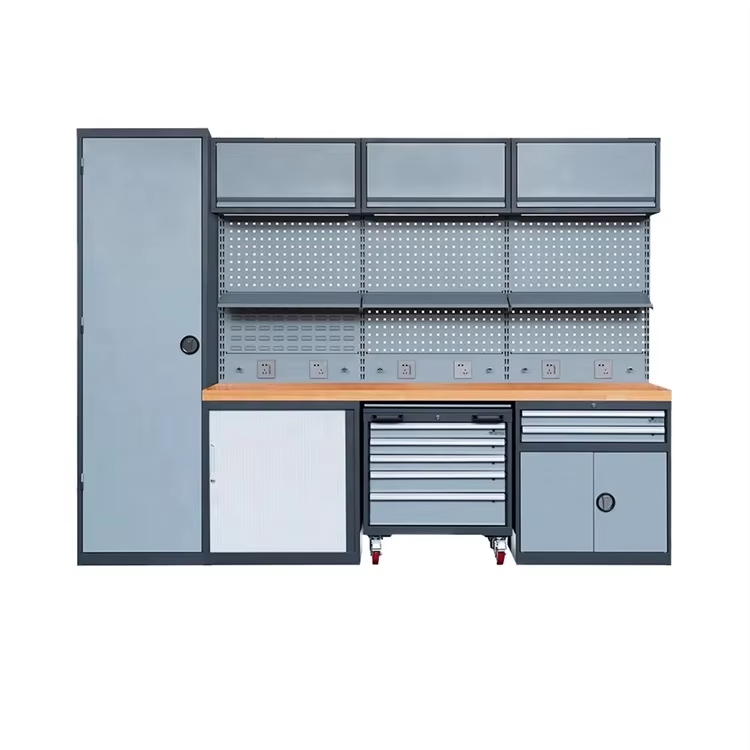
Zone-based storage organizes supplies by task sequence—not just convenience. Place fasteners—nuts, bolts, washers—in shallow drawers directly beneath the work surface for instant access during assembly. Reserve a locked cabinet below for fluids like brake cleaner and oil, keeping them spark-safe and neatly contained. Mount a pegboard above with diagnostic tools—multimeter, compression tester, OBD-II scanner—hanging within arm’s reach. This layout mirrors professional technician workflow: diagnose → disassemble → clean → reassemble. Each zone supports the next step, minimizing unnecessary movement and visual clutter. A well-designed garage workbench with integrated storage doesn’t just hold things—it orchestrates your work.
Adaptability Meets Rigidity: Modular and Mobile Garage Workbench Systems
Modular garage workbenches adapt to evolving needs through interchangeable components—drawers, shelves, side extensions—that scale from a compact 48-inch unit to a 10-foot workstation. Heavy-duty steel frames preserve rigidity while enabling reconfiguration, offering a cost-effective path to growth without replacing the entire system.
Mobile workbenches with locking casters deliver flexibility without sacrificing stability. When locked, high-quality casters anchor the bench firmly—preventing drift during torquing or precision assembly. Mobility cuts tool retrieval time by 34%, letting you reposition the bench closer to the vehicle or work area as needed. Combining modular storage with a mobile base creates a system that stays rock-solid when required—and moves effortlessly for cleaning, reorganization, or multi-vehicle workflows.

FAQs
Why is stability important in a garage workbench?
Stability ensures precise torque application and prevents part misalignment, stripped bolts, and kickbacks that can lead to costly errors.
What materials are best for a durable garage workbench?
Hybrid designs with a steel frame and hardwood or high-density laminate tops provide strength, vibration dampening, and resistance to warping.
How does integrated storage improve efficiency?
Integrated storage with drawers, pegboards, and labeled bins reduces time spent searching for tools, minimizes risks, and enhances overall workflow.
What are the benefits of modular and mobile workbench systems?
Modular systems allow customization and scalability, while mobile workbenches offer flexibility by enabling easy repositioning without compromising stability.
Table of Contents
- Precision and Safety: How a Dedicated Garage Workbench Prevents Costly Errors
- Durability and Load Capacity: Matching Your Garage Workbench to Automotive Tasks
- Smart Organization: Integrated Storage Solutions for the Efficient Garage Workbench
- Adaptability Meets Rigidity: Modular and Mobile Garage Workbench Systems
