
 EN
EN



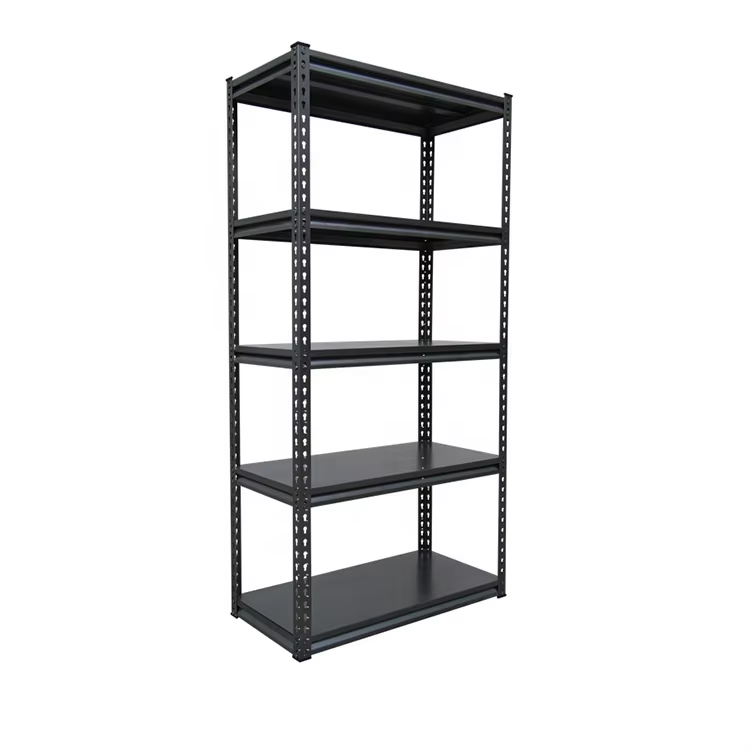
Infrastructure as a Long-Term Asset
Facility managers are often tasked with selecting equipment that must perform reliably under rigorous daily use. When managing warehouses, assembly areas, or large-scale research centers, the quality of storage infrastructure directly influences both site safety and operational flow. Based on industrial observation, it is clear that moving away from entry-level materials toward industrial-grade solutions is a critical strategic decision. A metal shelf is not just a place to store items; it is a load-bearing component of the facility’s architecture. By prioritizing structural longevity and engineering precision, organizations move from a cycle of constant replacement to a model of reliable, long-term asset management that supports heavy-duty operational requirements.
The Physics of Material Rigidity
The fundamental difference between metal and plastic in industrial storage lies in material science. Cold-rolled steel exhibits an inherent molecular rigidity that allows it to maintain its shape even when subjected to significant stress over extended periods. Plastic-based storage systems, regardless of their engineering, often suffer from "creep"—the tendency of a material to deform slowly under the influence of continuous mechanical stress. In an industrial environment, this deformation can lead to instability, where shelves begin to sag, eventually compromising the safety of the entire storage unit. Steel, by contrast, offers the high tensile strength required to manage heavy payloads without the risk of dimensional drift, ensuring that every shelf remains level and secure throughout its operational lifecycle.
Engineering Force Distribution
Professional-grade storage is an exercise in effective force distribution. A high-performance metal shelf does not support weight simply through mass; it utilizes specialized geometry to disperse stress. Through the use of box beams, reinforced uprights, and integrated cross-bracing, these systems convert concentrated point loads into distributed forces across the entire structural frame. This engineering approach is vital for sites handling bulk materials or high-density equipment. When a storage unit is designed to channel stress away from the center of the span, it prevents localized failure. Unlike synthetic alternatives, which often require thick, bulky reinforcements that consume valuable storage volume, the high-density nature of steel allows for a streamlined profile that maximizes storage potential without sacrificing stability.
Environmental Stability and Protective Coatings
The operational life of storage infrastructure is frequently tested by the environment itself. Facilities often experience fluctuations in temperature, humidity, or exposure to environmental contaminants, all of which accelerate the degradation of lower-quality materials. Metal systems must be protected against these factors through advanced surface engineering. The industry standard is electrostatic powder coating, a process that creates a seamless, chemically bonded shield over the steel. This coating is not merely aesthetic; it is a functional requirement that prevents oxidation, rust, and surface embrittlement. By ensuring a uniform application of these protective layers, industrial units maintain their structural load ratings in diverse climates, resisting the environmental stressors that would otherwise compromise a storage system’s mechanical integrity.
Regulatory Compliance and Operational Safety
In any institutional or industrial workspace, safety is the primary metric of success. Regulatory audits often examine the condition and load-bearing verification of all storage systems on-site. Using infrastructure that provides predictable performance is a core component of risk management. Because steel exhibits clear, verifiable mechanical limits, facility managers can confidently match storage units to the specific weight of the inventory they support. Furthermore, high-quality steel shelving units are less prone to the sudden, catastrophic failure modes associated with brittle or aged plastics. By installing robust, fire-resistant, and seismically stable metal storage, organizations foster a culture of safety that satisfies international health and safety mandates while protecting personnel from the risks associated with structural instability.
Manufacturing Standards and Supply Chain Reliability
The capacity to scale research or industrial operations requires a supply chain that guarantees technical consistency. FT Steel Furniture distinguishes itself through a commitment to automated production precision, ensuring that every component meets rigorous engineering tolerances. By utilizing advanced welding techniques and high-quality metallurgical standards, FT Steel Furniture provides global clients with storage systems that are built for high-performance reliability. This precision in manufacturing allows for seamless installation and a guaranteed structural integrity that plastic-based alternatives cannot replicate. Through its sophisticated approach to industrial production and logistical excellence, FT Steel Furniture serves as a cornerstone for organizations worldwide, equipping them with the robust, high-capacity storage systems necessary for long-term operational success and structural excellence in any facility.
