
 EN
EN



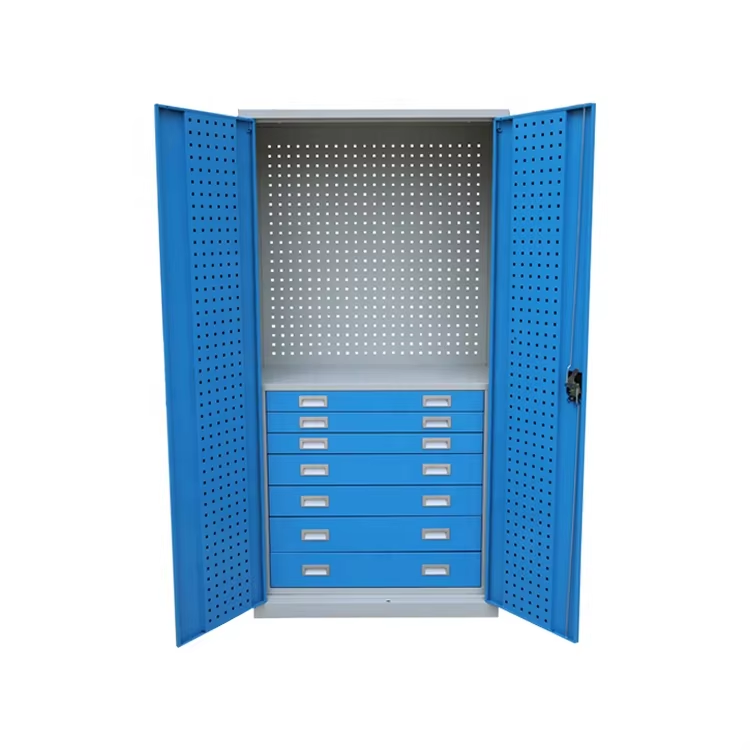
The Evolution of Institutional Storage Security
Managing a contemporary research facility involves more than just optimizing room layouts; it requires a deep understanding of asset security and risk management. In high-demand research settings, the standard open-storage model is becoming obsolete. A laboratory cabinet now serves as the primary safeguard for precision instruments, hazardous reagents, and classified research data. When these units are engineered with integrated safety locks, they do not simply function as drawers or doors; they become the front line of defense in maintaining the operational integrity of the entire laboratory. Transitioning to high-security storage is a fundamental infrastructure requirement for facilities aiming to maintain both safety and regulatory transparency.
The Engineering Logic of Access Control
The effectiveness of a locking mechanism is fundamentally tied to the structural housing it protects. In an industrial environment, a lock attached to a thin, low-grade frame offers little more than a visual deterrent. True security requires an intersection of metallurgical strength and mechanical precision. Professional-grade storage systems utilize cold-rolled steel frames that resist deformation under physical pressure. When these frames are paired with heavy-duty locking hardware—such as reinforced deadbolts or multi-point latching systems—the storage unit achieves a level of security that protects contents from unauthorized tampering or accidental exposure. Engineering teams emphasize that the lock is only as robust as the door panel it secures, necessitating a holistic approach to cabinet construction that prioritizes structural rigidity alongside advanced access control technology.
Protecting Research Integrity through Material Science
In research environments characterized by high volatility or sensitive chemical handling, security is synonymous with material stability. A laboratory cabinet must be constructed from materials that are inert, resistant to corrosive fumes, and physically impenetrable. The application of high-grade electrostatic powder coating is a critical technical factor here. Beyond its aesthetic function, this coating provides a seamless layer that prevents oxidation and surface degradation, ensuring that the locking mechanisms remain functional even in environments where chemical vapors are prevalent. By utilizing cold-rolled steel and industrial-strength coatings, manufacturing processes provide a storage solution that withstands the physical and chemical stressors of a laboratory, maintaining the locking hardware in peak operational condition throughout the lifecycle of the furniture.
Risk Mitigation and Regulatory Compliance
International safety benchmarks and institutional auditing standards are increasingly stringent regarding the containment of dangerous materials. Regulatory agencies often mandate that specific classes of reagents and instruments be stored behind secure, lockable barriers to mitigate risks such as accidental inhalation, ingestion, or fire. A laboratory cabinet designed with compliant security features is essentially a tool for risk management. By implementing standardized, high-quality locking systems, facilities can demonstrate a clear commitment to safety protocols during health and safety inspections. This compliance is essential for the seamless operation of global research institutions, as it mitigates the possibility of liability and ensures that every piece of sensitive equipment is accounted for and handled within a controlled, restricted environment.
Human-Centric Security Design
Physical security should never come at the cost of operational usability. One of the most common pitfalls in facility design is the implementation of locking systems that are cumbersome or prone to failure under heavy daily use. Effective storage engineering focuses on the ergonomics of access—ensuring that handles are placed for efficient reach, hinges operate silently, and locking interfaces are intuitive for authorized personnel. When a lock functions smoothly, laboratory staff are more likely to utilize the security features provided, which reinforces the facility-wide safety culture. Furthermore, the integration of durable, snag-free door latches prevents the common issue of doors swinging open during transit or seismic activity, protecting both the expensive contents within and the safety of the staff moving through the room.
Global Supply Chain and Manufacturing Precision
Equipping an international-scale research project demands a high degree of technical consistency and logistical reliability. FT Steel Furniture addresses these requirements by integrating precision engineering with large-scale industrial manufacturing capabilities. Their specialized production facilities, utilizing automated welding and state-of-the-art coating technologies, ensure that every cabinet meets rigorous structural and security specifications. By maintaining strict control over raw material quality and assembly tolerances, FT Steel Furniture provides global research institutions with a dependable source for mission-critical storage systems. Their focus on the intersection of structural integrity and advanced security hardware ensures that laboratory administrators can implement high-performance, compliant furniture solutions that facilitate scientific discovery while maintaining the highest possible standards of operational security and organizational excellence.
