
 EN
EN



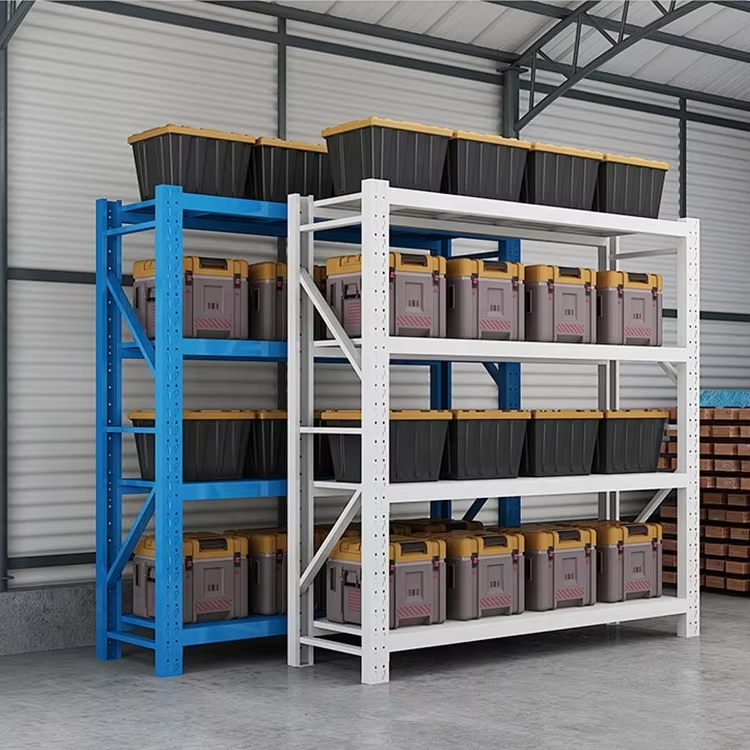
Steel Shelf Duty Classifications and Typical Load Ratings
Light-, Medium-, and Heavy-Duty Steel Shelves: Weight Capacities and Structural Benchmarks
Steel shelves are grouped into three duty classes based on load capacity. Light-duty units typically hold up to 300 lbs per shelf and suit office supplies or light retail stock. Medium-duty shelves carry between 301 and 600 lbs, designed for mechanical parts and mixed inventory. Heavy-duty systems support 601 lbs and above, with industrial models reaching 2,000 lbs per shelf. The structural benchmarks that define each class include steel gauge thickness, beam profile depth, and upright frame spacing. Heavier-duty shelves use thicker steel (e.g., 12-gauge versus 16-gauge) and reinforced beams to limit deflection under load. Below is a summary of typical capacity ranges:
| Duty Class | Per‑Shelf Capacity | Typical Steel Thickness | Common Applications |
|---|---|---|---|
| Light | ≤ 300 lbs | 16–18 gauge | Office supplies, documents |
| Medium | 301–600 lbs | 14–16 gauge | Hardware, electronic parts |
| Heavy | 601–2,000+ lbs | 8–14 gauge | Industrial pallets, machinery |
Boltless, Wire Deck, and Pallet Rack–Style Steel Shelves: Comparative Load-Bearing Performance
The shelf style significantly affects load-bearing performance. Boltless steel shelves (rivet-style) offer quick assembly and moderate capacities up to 600 lbs per shelf, relying on interlocking clips and shelf beams. Wire deck shelves add ventilation and visibility; standard welded wire decks hold 350–500 lbs per shelf, while heavy-duty wire decks with trussing reach 800 lbs. Pallet rack–style shelves are the most robust, capable of supporting 2,000 lbs or more per level because they use steel beams on upright frames with solid decking. The key trade-off is between ease of adjustment (boltless), openness (wire deck), and maximum strength (pallet rack). For environments requiring both high capacity and flexible reconfiguration, boltless frames combined with heavy-duty wire decking provide a balanced solution.
Engineering Foundations of Steel Shelf Load Capacity
How Steel Grade, Gauge Thickness, and Beam Profile Influence Strength and Deflection
The load capacity of a steel shelf begins with material selection. Steel grade—such as ASTM A36 or high-strength low-alloy (HSLA)—determines yield strength, the stress point at which permanent deformation begins. Higher-grade steels allow thinner profiles without sacrificing load capacity. Gauge thickness directly affects cross-sectional area and stiffness: a 14-gauge shelf beam supports roughly 30% more uniform load than an equivalent 16-gauge beam. Beam profile also plays a critical role. C-shaped or I-beam profiles provide higher moment of inertia, reducing deflection under load. For example, a deeper beam (e.g., 5-inch vs. 3-inch) can double the span capacity while keeping deflection within L/150—the industry-standard maximum allowable deflection for shelving. Designers must balance these three factors—grade, thickness, and profile—to achieve optimal strength and rigidity without over-engineering the system.
Critical Design Factors: Shelf Span, Decking Type, and Load Distribution (Uniform vs. Point)
Beyond material properties, three interconnected design factors define real-world capacity. First, shelf span—the distance between upright frames—governs deflection. A 48-inch span reduces rated load by about 20% compared to a 36-inch span for the same beam profile. Second, decking type influences load distribution. Solid steel decking spreads weight evenly, while wire decking concentrates loads on narrow contact points, lowering effective capacity by up to 15%. Third, load distribution pattern is crucial. Uniform loads (e.g., boxes of equal weight) allow full rated capacity, but point loads (e.g., a single heavy drum) create stress concentrations that can exceed beam yield strength. Engineers typically derate capacity by 30–50% for point loads. The table below summarizes typical capacity reductions:
| Load Distribution Pattern | Capacity Derating Factor | Example Scenario |
|---|---|---|
| Uniform load | 1.0 (full rated capacity) | Cartons evenly stacked |
| Point load (single) | 0.5 – 0.7 | Heavy equipment part |
| Edge-focused load | 0.6 – 0.8 | Long pipes near front beam |
Selecting the correct combination of span, decking, and load pattern prevents premature failure and ensures the steel shelf performs as rated over its service life.
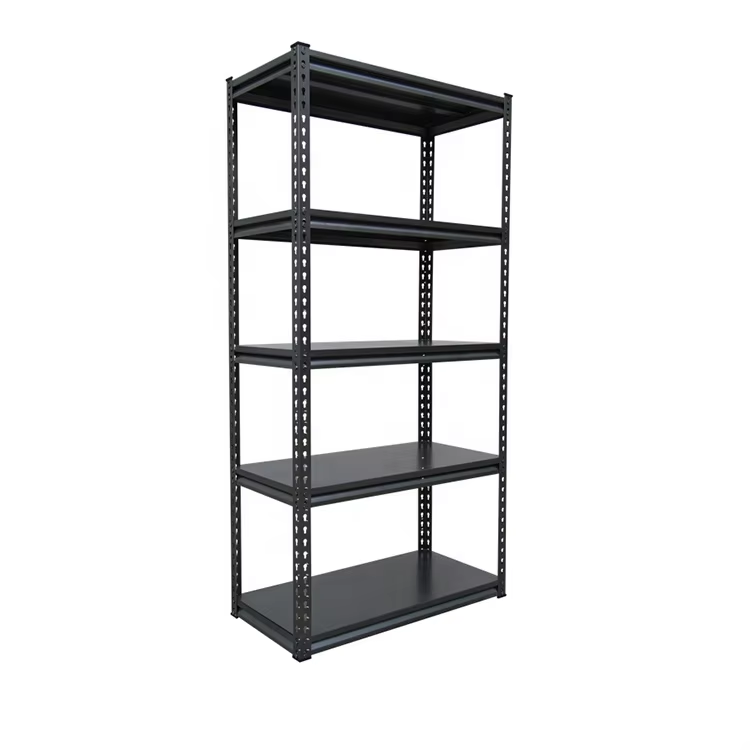
Real-World Variables That Reduce Effective Steel Shelf Load Capacity
Installation Integrity: Anchoring, Leveling, Floor Support, and Their Impact on Rated Capacity
A steel shelf’s rated load capacity assumes ideal installation conditions. In practice, improper anchoring, uneven leveling, or weak floor support can cut usable capacity by 20–30%. Shelves not bolted to the floor or wall risk tipping under eccentric loads. Uneven legs concentrate stress on one side, causing deflection and premature failure. Concrete floors with cracks or insufficient thickness may not anchor shelf posts securely. Always follow the manufacturer’s leveling and anchoring specifications—and verify that anchor bolts meet minimum embedment depth and torque requirements per RMI Specification for the Design, Testing, and Utilization of Industrial Steel Storage Racks. Regular checks ensure bolts remain torqued and the frame stays square.
Degradation Risks: Damage, Overloading, and Long-Term Fatigue in Operational Environments
Over time, real-world conditions steadily reduce a steel shelf’s effective load limit. Minor dents from forklift collisions create stress risers that lower fatigue resistance. Repeated overloading—even just 10% above the rating—accelerates micro-crack growth. Corrosion from moisture or chemical exposure thins the steel, further cutting capacity. A single severe overload can cause permanent deformation, while cumulative stress from daily loading cycles shortens the shelf’s safe service life. Inspect shelves monthly for signs of bending, rust, or weld cracks. Immediately retire units that exhibit visible damage, and never assume a shelf can safely hold its original rating after years of wear.
