
 EN
EN



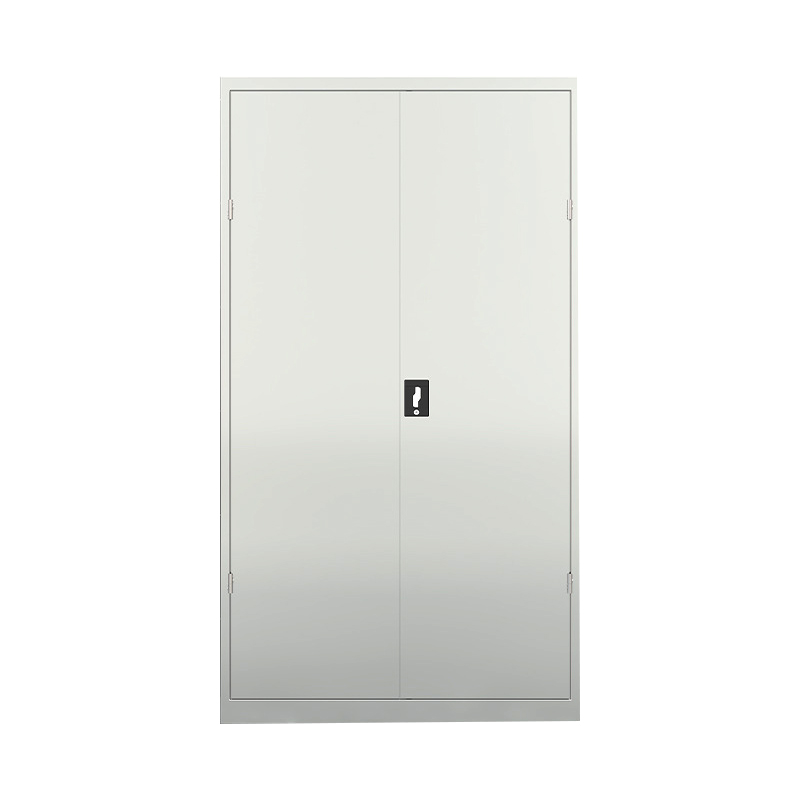
Assess Your Filing Needs: Volume, File Types, and Accessibility Requirements
Quantifying Document Volume and Mix to Determine Drawer Count and Depth
Begin by auditing your active paperwork:
- Count pages per document category daily or weekly
- Measure physical file thickness (standard letter files average 1" per 100 pages)
- Calculate projected annual growth—documents expand at ~15% year-over-year, per Gartner’s 2023 office infrastructure report
Vertical filing cabinets maximize floor space for small-to-midsize offices: a 1–2 drawer unit typically supports 3,000–5,000 pages. Lateral cabinets better serve high-volume environments, with 4-drawer models accommodating 15,000+ pages. Avoid overfilling drawers—facilities management data shows that exceeding capacity reduces accessibility and increases hardware strain by up to 70%.
Matching Cabinet Design to File Formats: Letter, Legal, Tabbed, and Digital-Ready Hanging Systems
Select cabinet configurations based on your core document types:
| File Format | Drawer Specification | Special Considerations |
|---|---|---|
| Letter (8.5"×11") | 16" depth minimum | Label holders for front tabs |
| Legal (8.5"×14") | 22" depth required | Adjustable rails for expanding files |
| Hybrid/odd sizes | 36" width lateral | Integrated digital conversion trays for scanning |
Hanging folder systems require reinforced rails supporting at least 15 kg. For fast-retrieval workflows, staggered drawers allow simultaneous access. Offices managing both physical and digital documents should prioritize cabinets with built-in cord ports and cable management features.
Prioritize Security and Safety in Every Filing Cabinet
Anti-Tip Stability and UL-Certified Structural Safety for Workplace Compliance
When filing cabinet drawers get pulled out all at once, there's a real danger of them tipping over. That's why many manufacturers now offer UL certified models after putting them through intense stability tests. These tests actually push the cabinets to hold twice what they're supposed to carry before anything breaks. For extra protection against accidents, look for anti-tip features like heavy duty bases or those wall mounting kits. The Occupational Safety and Health Administration found these safety measures cut down injuries by around three quarters based on their latest data from last year. Smart buyers should always go for cabinets that meet or beat those ANSI/BIFMA standards for durability since this makes sure everything stays safe and compliant well into the future.
Fire Resistance (UL 350/729) and Locking Options: Central vs. Individual, Including Smart Access Integration
Critical documents demand dual protection: fire resistance and controlled access. Cabinets rated UL 350 or UL 729 withstand temperatures up to 1,700°F for at least one hour, preserving contents during emergencies. Locking systems vary in scope and sophistication:
- Central locking simplifies administration but introduces single-point vulnerability
- Individual drawer locks support granular access control for sensitive or department-specific files
- Smart access systems (biometric or keypad-based) deliver real-time audit trails and remote permission updates
Electronic locks reduce unauthorized access incidents by 89% compared to mechanical keys, per industry research from GV Lock’s 2023 office security benchmarking report.
Evaluate Drawer Mechanics and Ergonomic Performance
Full-Extension Ball-Bearing Slides: Load Capacity, Cycle Life, and Smooth Operation Benchmarks
Drawer mechanics define daily usability and long-term reliability. Full-extension ball-bearing slides enable complete drawer access—reducing bending, reaching, and associated musculoskeletal strain. Three performance metrics matter most:
- Load Capacity (100–150 lbs/drawer): Supports dense legal or tabbed files without sagging, exceeding ANSI/BIFMA office furniture standards
- Cycle Life (25,000–50,000 operations): Translates to 15+ years of typical daily use before maintenance is needed
- Opening Force (<10 lbs): Ensures smooth, low-effort operation—validated by ergonomic lab testing
Premium slides maintain sub-8-pound resistance even after 20,000 cycles, thanks to dual-track ball bearings that evenly distribute weight. Prioritizing these specifications directly lowers workplace injury rates and extends cabinet service life.
Durability, Materials, and Long-Term Value of Office Filing Cabinets
What materials we choose really affects how long things last, how tough they are, and what it ends up costing in the long run. Steel cabinets have become the go to option in most commercial settings because they just don't get dented as easily, handle moisture better, and stand up to day after day of being bumped around something wood simply can't match when it comes to real world performance. Research from BIFMA shows these steel cabinets can hold well over 200 pounds in each drawer and still look good after about 15 to maybe even 20 years of constant use. Sure, buying steel costs roughly 20 to 30 percent more upfront compared to wooden alternatives, but think about this the need to replace them happens way less often maybe even half as much based on some facility managers tracking their equipment over time.
Key evaluation criteria include:
- Gauge thickness: 18–22 gauge steel delivers optimal strength-to-weight balance
- Joinery quality: Welded corners provide greater rigidity and longevity than spot-welded or bolted assemblies
- Finish integrity: Powder-coated surfaces resist chipping and corrosion three times longer than laminate finishes
Wooden cabinets suit specific aesthetic needs but require climate-controlled environments and protective coatings to guard against warping in humidity. Regardless of material, cabinets certified to BIFMA safety standards demonstrate 40% lower lifetime maintenance costs—making them a more resilient, cost-efficient foundation for document storage.
