
 EN
EN



Accurate Measurement: Foundation for a Perfect Steel Wardrobe Fit
Critical Dimensions: Floor-to-Ceiling Height, Wall Depth, and Obstruction Mapping
Getting accurate measurements matters a lot when installing those steel wardrobes. Take the floor to ceiling height at least three times across the room left side, middle spot, and right side too. This helps catch any dips or bumps in the floor that might eat into how much stuff can actually go up there vertically. Don't forget to check how deep the walls are either, especially where baseboards sit or tiles end since these little projections cut down on what fits inside. Important thing though is to mark everything that gets in the way vents sticking out, electrical boxes, plumbing lines running through, maybe even walls that slope inward somewhere. A good laser measuring tool will give pretty exact readings down to fractions of a millimeter. According to some industry reports, around two thirds of wardrobe installations run into problems because someone missed an obstacle during planning. Taking time to properly document all these details upfront saves money later on and makes sure the finished wardrobe works well despite whatever odd angles or obstacles exist in the space.
Avoiding Measurement Pitfalls That Derail Steel Wardrobe Installation
People often make mistakes when they measure things just at eye height and forget to leave room for doors and proper air circulation. It's really important to build in about 25mm of extra space all around the appliance so walls that aren't perfectly straight can still work, plus we need airflow too. The 2023 closet design study found that almost half (about 42%) of DIY folks miss this crucial detail completely. When checking those corners, grab a digital angle finder because most walls aren't square these days. If they're not, some creative shimming will get everything aligned properly. Best time to take measurements is actually during the day when sunlight comes through windows and shows up those tiny floor slants or ceiling bumps nobody notices at night. Write down all the numbers twice once in millimeters and again in inches. This double documentation prevents confusion later on and keeps what gets built matching exactly what was planned on paper.
Space-Smart Steel Wardrobe Features for Small Bedrooms
Pull-Out Compartments and Vertical Lift Mechanisms for Tight Corners
Small bedrooms can really benefit from pull out storage compartments that make use of those awkward corners nobody ever reaches. These compartments turn what would be wasted space into something actually useful for storing stuff. The compartments come equipped with these heavy duty soft closing guides so people don't have to stretch their arms out awkwardly to grab things from behind regular shelves. When there's absolutely no room on the floor at all, some designs go even further by using vertical lifting mechanisms instead of traditional swinging doors. Imagine a metal panel that simply rises up when needed, taking up absolutely no space in front but still giving complete access to whatever is stored inside. All these different storage solutions fit right into the main steel framework without making the whole thing wobbly or flimsy. What we get is smart storage options that work great day after day without falling apart.
Extendable Hangers and Telescopic Rails: Maximizing Hanging Capacity in Compact Footprints
Telescopic rails tackle that annoying issue we all face with unused space hovering over our hanging clothes. The ability to adjust their height means users can bring down the rail when dealing with shorter stuff like shirts or jackets, which opens up valuable vertical space above for adding shelves or baskets. Then there are those extendable cascade hangers that really pack a punch in terms of storage efficiency. They work from just one anchor point but support several arms that dangle down, each capable of holding around 8 to 12 pieces of clothing straight up and down. When combined with sleek steel frames, this setup manages to boost actual usable storage space by roughly 40 percent compared to regular closet systems, all while keeping the overall size exactly the same as before.
Custom Internal Configuration Based on Lifestyle and Storage Behavior
Behavioral Audit: Matching Compartment Types to Daily Wear Frequency and Item Categories
Optimizing a steel wardrobe begins with understanding how you actually use it. Conduct a simple behavioral audit: track which items you wear 2–3 times weekly versus those stored seasonally or occasionally. Use those insights to assign compartment types strategically:
- High-use zones (eye-level drawers, slide-out shoe racks, quick-grab trouser rails) for daily essentials
- Mid-access zones (adjustable shelves, pull-out garment trays) for seasonal rotation
- Low-frequency zones (top shelves with lidded bins, deep bottom drawers) for off-season textiles or heirlooms
- Specialty zones, like velvet-lined pull-down hooks, for delicate evening wear
This behavior-led configuration reduces daily outfit selection time by up to 60%, turning passive storage into an intuitive extension of your routine.
Modular Layout Principles for Scalable and Adaptable Steel Wardrobe Design
Zoned Storage Strategy: Optimizing Access, Seasonality, and Long-Term Storage
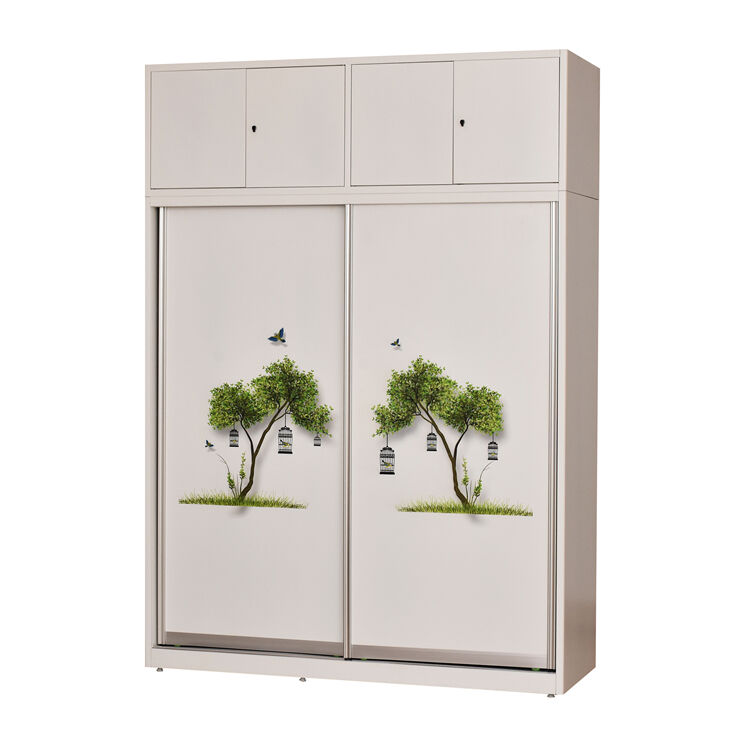
A zoned storage strategy transforms your steel wardrobe into an intelligent, evolving system. Divide interior space into three functional tiers:
- High-access zones at eye level (1,200–1,600 mm from floor) for daily essentials like workwear and outerwear
- Mid-access zones (600–1,200 mm and 1,600–2,000 mm) for seasonal items rotated every 3–6 months
- Low-access zones, near the top or base, for long-term storage—luggage, memorabilia, or archival textiles
This tiered approach reduces visual and physical clutter by 40%, according to spatial efficiency studies. Crucially, the inherent modularity of steel framing allows effortless reconfiguration: adjust shelf heights, swap rails for baskets, or add new modules as lifestyle needs shift—no full replacement required, unlike rigid wooden systems.
