
 EN
EN



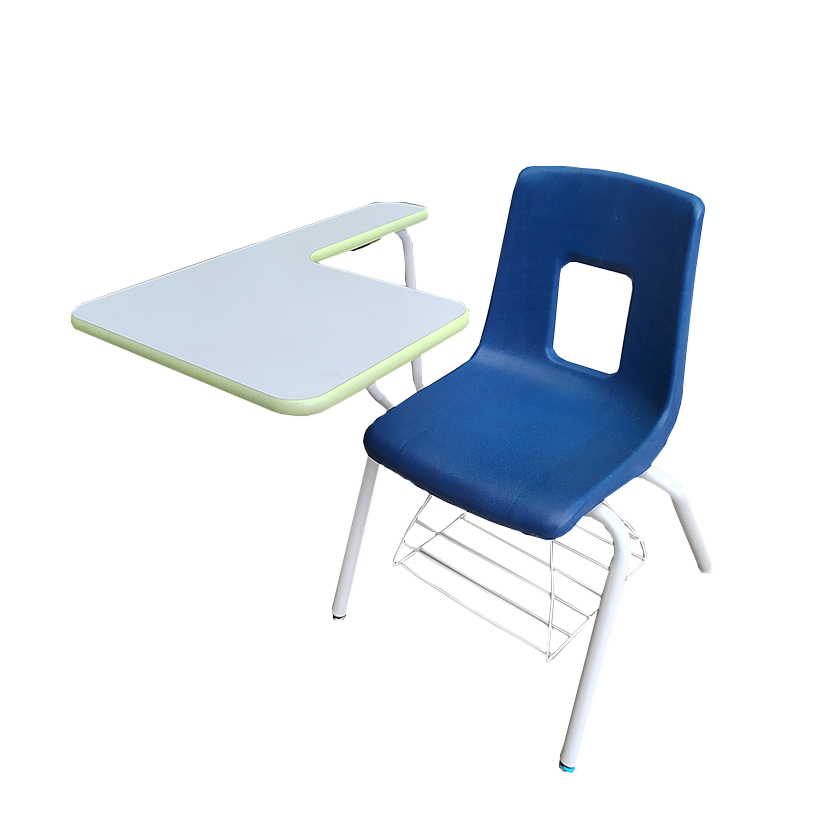
Dimensional & Ergonomic Safety: BS EN 1729 and ANSI/BIFMA Compliance for School Desk and Chair
Anthropometric Alignment: How EN 1729-1:2022 Defines Height-Adjustable Ranges and Stability Thresholds
The BS EN 1729-1:2022 standard establishes specific measurements for school desks and chairs according to how big students actually are. When it comes to seat height, manufacturers need to make sure they cover the range from the shortest 5% to tallest 95% of kids in each age bracket. This helps ensure feet can rest properly on the floor while leaving enough space under the thighs. Desk heights should be adjustable so they fit where someone's elbows naturally sit when sitting down, which matters a lot for keeping shoulders relaxed while doing homework or taking notes. The stability requirements are pretty strict too. School furniture needs to hold up against sideways pushes of around 30 pounds force without moving around or flipping over completely. This kind of durability makes sense given all the normal bumping and movement that happens in classrooms day after day.
Real-World Impact: UK Audit Findings on Non-Compliant School Desk and Chair Dimensions in Primary Classrooms
According to a recent field study conducted in the UK back in 2023, schools where classroom furniture didn't meet safety standards saw nearly double the number of ergonomic issues compared to classrooms following EN 1729-2 and ANSI/BIFMA X5.1 guidelines (Ponemon Institute, 2023). The main problems? Desks that couldn't adjust height, making kids hunch their shoulders, and chairs without proper lower back support. These issues are strongly connected to more body aches and shorter attention spans for children between six and twelve years old. When schools actually follow these established standards, they're not just ticking boxes but implementing real solutions backed by research from thousands of measurements taken on actual human bodies of different sizes and shapes.
Fire Safety Performance: Flame-Spread Ratings and Regulatory Mandates for School Desk and Chair Materials
Fire safety compliance directly affects evacuation safety and life safety outcomes in educational settings. International regulations impose strict flame-spread and smoke-development limits on all exposed surfaces of school desk and chair units to delay flashover and maintain visibility during emergencies.
Class 1/A Certification Requirements Under UK Building Regulations and IBC Chapter 8
The UK Building Regulations stipulate that materials need Class 1 certification according to BS 476-7 standards, which basically means they can't let flames spread vertically more than about 165 millimeters. Over in America, things work differently but are just as strict. The International Building Code's Chapter 8 demands Class A compliance through ASTM E84 testing. This involves checking both the Flame Spread Index (which should be between 0 and 25) and the Smoke Developed Index that must stay below 450 at maximum. When schools or offices use furniture that doesn't meet these fire safety requirements, research from Fire Safety Journal back in 2023 showed something alarming happens. Flashovers become much more likely in tight classroom environments, somewhere around 40 to 60 percent more so. Not only does this create dangerous conditions, but it also leads to occupancy violations and puts educational institutions at serious legal risk if inspected.
Testing Standards Compared: ASTM E84 (US) vs. BS 476-7 (UK) for Smoke Density and Flame Propagation
The ASTM E84 test looks at how flames spread across surfaces and measures smoke density in a special 25 foot long tunnel setup. Materials get labeled as Class A (with FSI scores from 0 to 25), B or C based on these results. Smoke toxicity levels are also measured since clear visibility during emergencies is absolutely critical for people trying to escape. Meanwhile, BS 476-7 focuses solely on how fast flames move vertically upwards, giving products ratings from Class 1 to 4 but completely ignoring smoke production factors. What neither of these standards accounts for though is how different components in furniture actually interact when exposed to fire. Real fires don't just affect one part of an office chair or desk - they involve complex reactions between wood surfaces, metal frames, fabric coverings, and even glues used during assembly. Because there's still no agreement between these testing methods, companies that sell products globally have to run tests under both systems separately, adding time and cost to their certification processes.
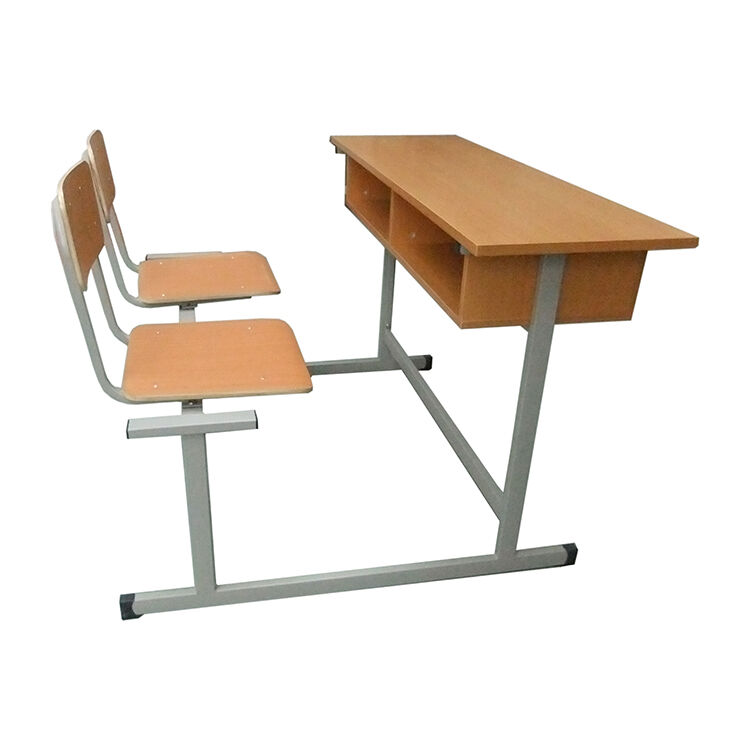
Durability & Chemical Resistance: Industrial-Grade Material Specifications for High-Traffic School Desk and Chair
HPL Benchmarking: EN 438-2 Requirements for Impact Resistance (≥12 kN) and Abrasion Endurance
Surfaces made from High Pressure Laminate (HPL) that carry the EN 438-2 certification hit all the right marks when it comes to durability needed in schools and colleges. According to the standard, they need to withstand impacts of at least 12 kN, which is roughly what happens when something weighing around 50 kg falls from normal table height. This helps keep surfaces crack free even after books drop or kids bump into tables accidentally. When it comes to scratches, these materials pass Taber tests with flying colors, surviving about 400 cycles under just 1 kg weight before showing any sign of wear. What makes HPL really stand out though is its non porous nature. It doesn't stain easily and holds up well against stuff commonly found in classrooms like permanent marker ink, those strong alcohol based cleaners we've all seen during pandemic times, and sticky residue left behind by posters or labels. Schools that actually use furniture meeting this EN 438-2 standard tend to replace their surfaces about 60 percent less often over a decade than those with cheaper options. Plus there's another benefit worth mentioning too the material maintains its color consistency thanks to UV stability testing, so desks don't fade over time. And because of the thermoplastic core inside, these surfaces stay dimensionally stable regardless of whether winter cold hits or summer heat takes over.
Structural Integrity & Injury Prevention: Corner Radius, Corrosion Protection, and Frame Certification for School Desk and Chair
Safety-driven structural design reduces injury potential in dynamic learning spaces through three interlocking requirements:
- Corner Radius Standardization: ASTM F1487 specifies a minimum 5 mm radius on all exposed edges of school desk and chair components—reducing laceration risk by 72% versus sharp-edged alternatives (U.S. Consumer Product Safety Commission).
- Corrosion Protection: Steel frames must carry ISO 12944-5 compliant coatings—such as epoxy zinc primers—to deliver 15-year resistance against humidity, chemical spills, and mechanical abrasion.
- Frame Certification: EN 1729-2 mandates static load testing: seats must withstand ≥600 N and desktops ≥1,000 N without deformation or failure. Third-party validation—including BIFMA G1 torsional stability testing—confirms resistance to tipping under uneven or dynamic loading, such as students leaning or swinging on chairs.
Table of Contents
- Dimensional & Ergonomic Safety: BS EN 1729 and ANSI/BIFMA Compliance for School Desk and Chair
- Fire Safety Performance: Flame-Spread Ratings and Regulatory Mandates for School Desk and Chair Materials
- Durability & Chemical Resistance: Industrial-Grade Material Specifications for High-Traffic School Desk and Chair
- Structural Integrity & Injury Prevention: Corner Radius, Corrosion Protection, and Frame Certification for School Desk and Chair
