×
×
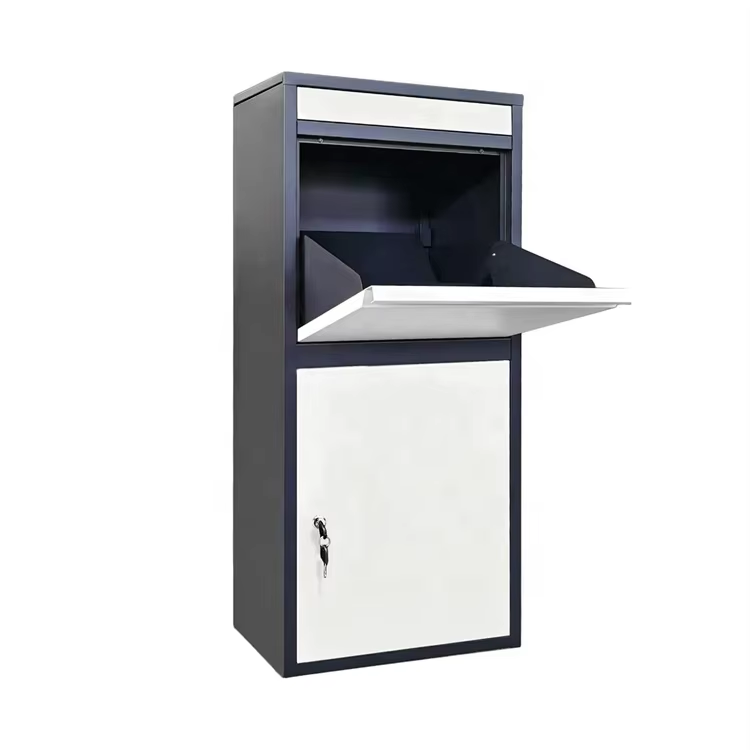
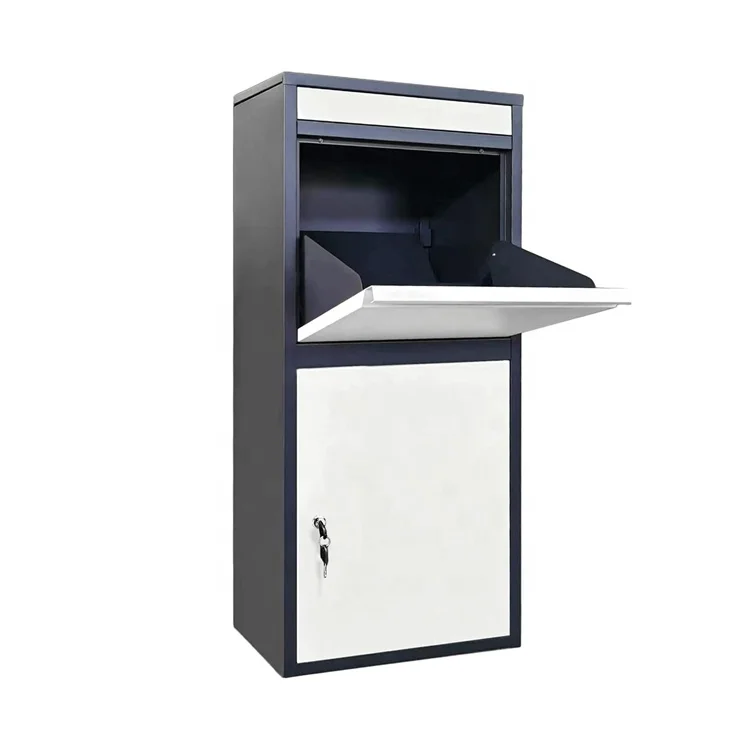
For outdoor parcel lockers that need to last, high quality steel is really important, especially when it comes to resisting corrosion. Regular carbon steel just doesn't cut it in places where there's lots of moisture or salt air from the coast. Stainless steel works much better because it contains around 10.5% chromium or more, which creates this protective oxide layer on the surface that actually repairs itself over time. This makes a big difference in areas with high humidity or near the ocean where regular steel would start to rust within months. Some recent studies show that stainless steel lockers keep about 98% of their strength even after sitting outside by the sea for 15 whole years. That's pretty impressive compared to normal steel lockers that only manage around 63% structural integrity under similar conditions according to findings published in the Parcel Security Journal last year.
| Property | Galvanized Steel | Stainless Steel |
|---|---|---|
| Corrosion Resistance | Moderate (zinc coating) | High (chromium oxide) |
| Cost per Unit | $850–$1,200 | $1,500–$2,300 |
| Maintenance Cycle | Recoating every 5–7 years | Minimal (<10-year intervals) |
| Best Use Case | Low-salt inland climates | Coastal/high-humidity zones |
While galvanized steel offers lower upfront costs, its long-term maintenance needs make it less economical in corrosive environments. In salt-rich areas, stainless steel’s lifetime cost is 27% lower due to minimal upkeep (Industrial Material Economics 2022).
Parcel lockers made from steel according to ASTM E695 standards are pretty tough stuff, able to take hits of around 250 pounds force. That's roughly what happens when a delivery cart slams into them at about 15 miles per hour speed. Most of these lockers come with walls that are 14 gauge steel, which measures out to approximately 1.9 millimeters thickness. Inside there's also some extra support structures put in place so the individual compartments don't get bent out of shape during those rough moments. Independent tests have shown that lockers built this way actually save money on repairs down the road. Looking at numbers from five year periods, certified models end up costing about 40 something percent less in fixes than their uncertified counterparts.
Steel parcel lockers installed outdoors need proper Ingress Protection (IP) ratings if they're going to last through tough weather conditions. Lockers with at least an IP54 rating stop around 92 percent of problems caused by bad weather because they keep out dust and handle water splashing from all directions according to recent hardware durability studies. When looking at areas near coasts or places where it rains a lot, going for IP65 rated units makes sense since these offer better defense against water coming from low pressure jets. This extra layer helps protect what's inside from getting damaged by moisture and tiny particles that tend to build up in both industrial settings and along seashores.
Three key design elements work together to enhance moisture resistance:
In laboratory tests simulating monsoon conditions, lockers incorporating these features maintained internal humidity below 1%, demonstrating superior environmental control.
A 36-month study of 120 steel parcel lockers in Miami Beach revealed significant performance differences between standard and advanced units:
| Metric | Standard Units | Advanced Weatherproof Units |
|---|---|---|
| Corrosion Incidence | 62% | 9% |
| Maintenance Interventions | 7/year | 1.2/year |
| Tenant Complaints | 33% | 4% |
Units featuring zinc-nickel coatings and overmolded hinges endured Category 1 hurricane winds without seal failure—an important consideration for facilities like pharmacies storing temperature-sensitive deliveries in flood-prone zones.
To combat rising package theft—over 260 million reported in 2023—modern steel parcel locker systems employ multi-layered access controls. Commercial-grade units integrate:
Hybrid configurations allow property managers to assign different access methods based on user roles—for example, physical keys for maintenance staff and app-based unlocking for residents.
Premium steel parcel lockers incorporate robust anti-theft engineering beyond basic weather resistance:
| Feature | Purpose | Test Standard |
|---|---|---|
| 3-point deadbolt locks | Prevents door prying | ANSI/BHMA A156.5 Grade 1 |
| 12-gauge steel doors | Withstands 1,500+ lb force attempts | ASTM E2837 impact tests |
| Concealed hinge design | Eliminates external leverage points for crowbars | UL 1037 anti-theft |
Coastal Florida communities implementing these designs reported a 92% drop in tampering incidents within 18 months, according to municipal security data. For units weighing over 600 lb, embedded concrete footings are advised to deter whole-container theft.
Steel parcel lockers designed with modular elements can adapt to all sorts of space constraints and day-to-day operations. For residential areas, we typically see small groups of around 6 to 12 compartments installed in apartment building foyers. These units usually measure between 12 and 18 inches across each compartment, which works well for standard sized packages. When looking at commercial properties though, the requirements change completely. Businesses need much bigger systems with at least 20 lockers and door openings over 24 inches wide to handle the constant flow of deliveries. What makes these systems really valuable is their flexibility factor. Most locker makers now include features like adjustable internal shelves and removable partitions. This means when business volumes shift or new packaging standards emerge, operators can literally take apart large lockers and convert them into several smaller ones without having to replace entire units.
Steel parcel lockers designed properly can handle almost all kinds of deliveries thanks to their mixed size options. Regular sized compartments measuring around 16 inches high by 18 inches wide work great for letters and little packages, whereas bigger ones standing 36 inches tall and 24 inches wide have stronger floors that can take packages weighing up to half a hundred pounds. According to recent studies from the 2023 Parcel Logistics Report, adding just one extra large slot cuts down on failed deliveries by about a fifth. The lockers also feature special padding to stop things from rattling around inside and double locks that keep everything secure when someone goes to pick up their stuff.
How steel parcel lockers get installed really affects how stable they stay over time. For places like concrete patios or inside buildings, surface mounted models work well when attached with those 3/8 inch steel plates. These setups let businesses move things around easily if they need to upgrade later on. When going deeper underground, installing them between 24 and 36 inches below where the ground freezes gives better protection against strong winds, especially along coasts or busy spots where people constantly pass by. No matter which way goes in, always use tamper proof anchor bolts rated at least Grade 5. Also important is giving them a slight forward angle of about 1 to 2 degrees so water drains properly away from the base. This simple step actually stops most problems caused by bad weather according to UL 2034 standards, with studies showing it prevents roughly three quarters of all weather related issues.
To maximize durability, implement this quarterly maintenance protocol for outdoor steel parcel locker systems:
Manufacturers note a 63% reduction in repair costs over five years when this checklist is followed (2023 Logistics Equipment Report).
Despite marketing claims, no outdoor steel parcel locker is truly maintenance-free. Even advanced galvanized coatings like G90 hot-dip galvanization only delay corrosion. Real-world performance varies significantly by environment:
A 34-month field study of 112 units found that even Grade 316 stainless steel developed pitting corrosion without biannual maintenance—challenging the notion of “set-and-forget” operation (Material Performance Journal, 2023).
Stainless steel is better for outdoor parcel lockers because it contains chromium which forms a protective oxide layer that self-repairs, making it highly resistant to corrosion, especially in moist or salty environments.
IP ratings determine the level of protection a parcel locker has against dust and water ingress. Higher ratings like IP65 provide superior protection against water jets and are suitable for harsh weather conditions.
Key design features include marine-grade silicone gaskets to prevent water ingress, sloped roofs for efficient rain deflection, and dual-stage drainage systems to remove water quickly.
No steel parcel locker is entirely maintenance-free. Regular maintenance is required to prevent corrosion and ensure longevity, especially in environments with high moisture or industrial pollutants.

LUOYANG FURNITOPPER provides premium steel furniture manufacturing for global B2B buyers. Our ISO 9001/14001/45001-certified factory offers KD lockers, tool cabinets, shelving & dorm furniture with CNC precision, 5S quality control, and one-stop OEM/ODM solutions. Contact us today!
No.8 Yanguang Road, High-Tech District, Luoyang 471000, Henan, China.
Copyright © 2025 by LUOYANG FURNITOPPER IMPORT AND EXPORT TRADING CO., LTD. Privacy Policy

 EN
EN


 Hot News