×
×
Steel shelving units need to handle two main types of weight distribution. First there's the even spread weight across the whole shelf surface, and then there are those point loads where heavy items create stress on just one spot. Take a standard rack rated at 1800 pounds for general use. If someone stacks all that weight in one corner instead of spreading it out, the safe capacity drops dramatically to around 600 pounds. Warehouse managers should know this matters because according to Warehouse Safety Council data from last year, almost a third of all racking failures happen when workers don't distribute weight properly. That's why training staff on correct loading techniques isn't just good practice, it's essential safety protocol in any storage facility.
In multi-tier setups, lower shelves experience amplified vertical loads, with stress increasing by 18-22% per tier under dynamic conditions such as forklift movement. Even when within rated capacity, 5-tier installations show 40% faster metal fatigue in uprights compared to single-tier systems due to cumulative strain and vibration exposure.
Third-party engineering validation is essential—30% of imported racks fail initial load testing due to unverified design modifications. Certified inspectors assess weld quality, bolt torque accuracy (±5% of specification), and beam deflection, ensuring it remains at or below L/180 of the span length as required by ANSI standards.
Racks with good load ratings still break down all the time because of things that happen in actual warehouses. Uneven floors are a big problem, especially in older buildings where this issue affects around 60% of spaces. Forklifts bumping into them regularly cuts their real capacity down by as much as 35%. Looking at data from 2023 on 120 rack collapses tells another story. About half those racks had proper ratings but failed because they didn't have enough seismic support or suffered from rust at key connection points. This shows there's a clear difference between what specs say and how well racks actually perform when put to work day after day.
ANSI standard MH16.1-2023 establishes strict requirements for adjustable steel shelving systems covering things like how stable they stay when loaded, the strength of their welds, and just how thick those base plates need to be. For importers working with Chinese factories, compliance becomes really important, particularly with those multi-level setups where putting too much weight on one side can lead to catastrophic failures. A lot of foreign suppliers say they follow US standards, maybe around 78% according to some reports, but when the Material Handling Institute actually checked in 2023, barely a third met the seismic reinforcement specs properly. The bottom line? Anyone serious about safety needs to get proper third party certifications showing actual test results for dynamic loads and make sure vertical deflections don't exceed L/240 when shelves are fully loaded with goods.
Storage system safety standards come from two main groups working together: the Rack Manufacturers Institute (RMI) and the American Society of Civil Engineers (ASCE). According to ASCE 7-22 guidelines, adjustable steel shelves need to handle sideways forces equivalent to about 0.6 times gravity in areas at risk for earthquakes. Meanwhile, RMI sets different rules requiring baseplate anchors strong enough to resist around 1,800 pounds of upward force during shaking events. But there's a problem worth noting here. A lot of Chinese manufacturers skip out on something called ASCE 41-17 nonlinear modeling when designing against progressive collapse scenarios. This oversight has actually been connected to roughly one in every five rack failures reported in California according to data from the Structural Engineers Association back in 2023. The consequences can be serious if not addressed properly.
Most Chinese manufactured adjustable steel shelves stick to the GB/T 28576-2012 standard. This allows for columns that are about 15 percent thinner than what's required by ANSI MH16.1 specifications (2.5mm compared to their 3.05mm requirement). What's more, these shelves can have welded joints even in areas prone to earthquakes, whereas American building codes insist on bolted connections instead. Some testing done recently in 2024 revealed pretty concerning results too. When put through the same kind of stress tests defined by ANSI standards, these racks actually broke down nearly 58% quicker. For anyone importing this equipment, there are some important steps to take. First off, always ask for those official mill test reports that confirm the steel meets ASTM A500 Grade C requirements. And secondly, don't skip out on having someone check things before shipping. Get an inspector certified by RMI to look everything over carefully.
Reliable adjustable steel shelving relies on high-strength materials like ASTM A500 steel, with minimum yield strength of 50 ksi (345 MPa) and impurity levels below 0.05%. Precision fabrication methods—such as laser cutting and robotic welding—ensure dimensional accuracy within ±1.5mm, enhancing load distribution.
Key quality indicators include:
Third-party evaluations using dye-penetrant testing detect micro-cracks invisible during visual inspection. Mill test certificates (MTCs) providing batch-specific chemical composition are mandatory for compliance and traceability.
Industrial powder coatings should measure 60-80μm thick to pass 500+ hours of salt spray testing (ASTM B117). In coastal or humid environments, hot-dip galvanizing (550 g/m² zinc coating) delivers three times greater corrosion resistance than electroplated finishes.
Recommended climate-specific coatings:
| Environment | Coating Type | Expected Service Life |
|---|---|---|
| Arid (RH <30%) | Epoxy-polyester hybrid | 15+ years |
| Tropical (RH >80%) | Zinc-iron alloy galvanize | 12-14 years |
| Chemical Exposure | Fluoropolymer multilayer | 10-12 years |
Verify coating performance through cross-hatch adhesion tests (ISO 2409) and dry film thickness measurements. Reject components with less than 90% adhesion retention or coating thickness deviations exceeding ±15%.
In seismic zones, adjustable steel shelving must include engineered lateral bracing and reinforced connections to endure ground accelerations above 0.4g. Over 40% of warehouse operators in moderate-to-high risk areas underreported rack capacity by at least 20% in 2023 audits, increasing vulnerability during earthquakes. Essential safeguards include:
Recent RMI studies indicate 62% of imported racks fail U.S. spectral response criteria, primarily due to incorrect material thickness calculations for horizontal seismic forces.
Epoxy-anchored systems offer 34% higher resistance to multi-axis forces than expansion bolts, according to 2023 RMI collision testing. Anchor spacing and floor flatness significantly affect performance:
| Design Factor | Static Load Rating | Dynamic Load Rating |
|---|---|---|
| Anchor Spacing (48") | 100% Capacity | 82% Capacity |
| Anchor Spacing (>48") | 100% Capacity | 63% Capacity |
Floor irregularities exceeding 1/8" per foot reduce anchor effectiveness by 55% during oscillations. Require third-party torque verification for all anchor installations in adjustable steel shelf systems.
Getting storage racks right starts with good LARC drawings Load Application and Rack Configuration documents that show exactly where loads should go, what weight limits apply, and how those adjustable steel shelves need to be set up. Without these plans, warehouses risk serious problems since overloaded racks cause about one out of every four failures according to industry reports. When engineers work with LARCs, they match what manufacturers say their equipment can handle against real world conditions like pallet dimensions and day to day operations. This becomes really important when dealing with suppliers overseas because making wrong assumptions about compatibility often leads to dangerous situations down the line.
For any warehouse storage system, licensed structural engineers need to sign off on both the design work and actual installation plan before they can comply with those ANSI/RMI guidelines. These experts check that the seismic bracing takes into account local earthquake risks and confirm the bolt placements actually support what the floors can handle. Most third party inspectors will flat out refuse to accept any setup that doesn't have that official engineering stamp attached. And when this happens, companies end up facing expensive project holdups that could have been prevented if they had worked with certified professionals from day one instead of waiting until the last minute.

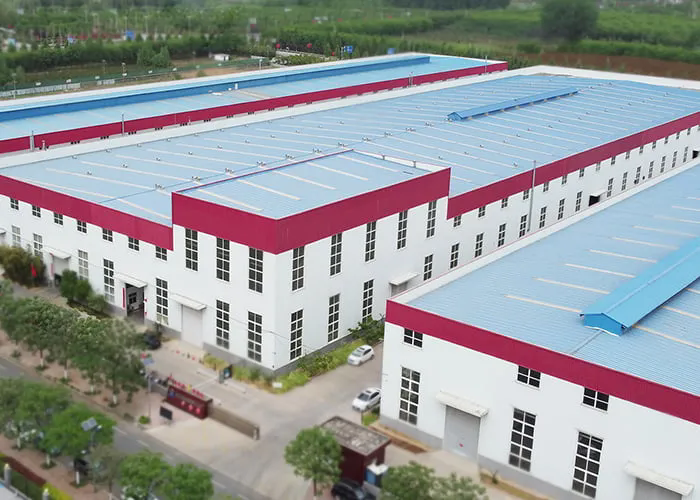
LUOYANG FURNITOPPER provides premium steel furniture manufacturing for global B2B buyers. Our ISO 9001/14001/45001-certified factory offers KD lockers, tool cabinets, shelving & dorm furniture with CNC precision, 5S quality control, and one-stop OEM/ODM solutions. Contact us today!
No.8 Yanguang Road, High-Tech District, Luoyang 471000, Henan, China.
Copyright © 2025 by LUOYANG FURNITOPPER IMPORT AND EXPORT TRADING CO., LTD. Privacy Policy

 EN
EN


 Hot News